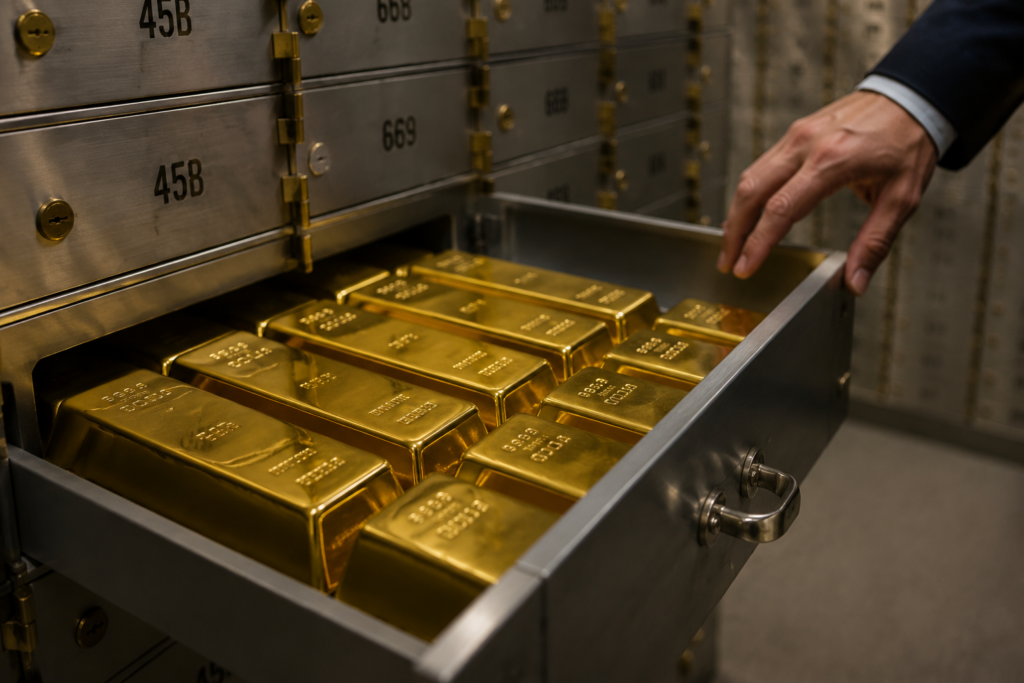
Gold rebounded on Thursday after the Federal Reserve delivered its first rate increase in more than three years, with easing oil prices helping bullion recover even as policymakers signalled that US borrowing costs may rise again before year-end.
Spot gold climbed as much as 1.1% in early Asian trade before paring the move to around $4,295 an ounce, recovering from a six-week low touched on Wednesday. December US gold futures remained weaker near $4,334.
The rebound came despite the dollar reaching a seven-week high, showing that the reaction is being driven by more than the Fed decision alone.
Fed hike was hawkish, but much of the shock was priced in
The Fed unanimously raised its target range by 25 basis points to 3.75%-4%, its first increase since 2023.
Updated projections showed 16 of 18 policymakers expect at least one more rise this year, while the median forecast points to a 4%-4.25% range by December.
That would normally be uncomfortable for gold because higher rates lift the opportunity cost of holding an asset that pays no interest. But the decision was heavily anticipated, limiting the element of surprise.
CMC Markets analyst Laurence Booth told MarketWatch that gold’s resilience also reflects demand outside the US rates trade, including Chinese ETF inflows, a firm domestic Chinese market and continued central-bank buying.
That suggests bullion is becoming less dependent on the traditional inverse relationship with US rates.
Falling oil removes one source of pressure
The more supportive development for gold came from energy markets.
Brent crude extended its retreat towards $105 a barrel after reports that Saudi Arabia was offering additional cargoes through Oman, easing concern over disrupted exports following damage to its East-West pipeline.
Oil had climbed sharply above $100 earlier in the week as Middle East supply risks intensified.
Lower crude matters because the recent oil surge had reinforced expectations that inflation would remain sticky and forced Treasury yields higher.
As that pressure eases, the case for an even more aggressive Fed response becomes less immediate.
Analysts noted that softer oil and Treasury yields can improve gold’s appeal by reducing inflation-driven rate pressure, although a persistently hawkish Fed would still pose a risk through higher yields.
Stronger dollar keeps the rebound in check
The main obstacle is the dollar, as the greenback reached a seven-week high after the Fed decision as short-term Treasury yields rose and markets increased bets on another rate increase.
The two-year Treasury yield has climbed to its highest since July 2024.
Longer-dated yields have been steadier, with the 10-year Treasury hovering just below 5%. That matters for gold because another break higher could quickly challenge the rebound.
The Bank of England is also due to decide policy on Thursday and is expected to keep rates unchanged despite UK inflation rising to 3.1%.
The post Why is gold climbing when higher rates should be pushing it lower? appeared first on Invezz